Office Ergonomics Vector Infographic: Visualizing Workplace Health and Safety
Creating effective health and safety training materials often feels like a balancing act between technical accuracy and visual engagement. When you are tasked with explaining proper posture, equipment setup, or injury prevention, walls of text simply do not work. This is where an Office Ergonomics Vector Infographic becomes an essential asset for communicators. It transforms dry regulatory guidelines into accessible, actionable visual content that employees and students can actually understand and remember. Rather than starting from scratch in design software, utilizing a professional template allows you to focus on the message rather than the mechanics of illustration.
Why Visual Clarity Matters in Ergonomic Training
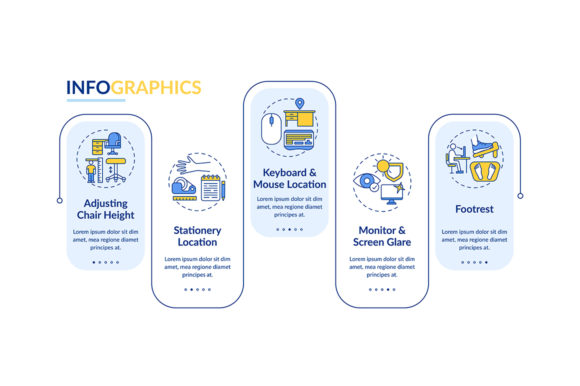
Ergonomics is inherently spatial. It involves angles, distances, heights, and physical relationships between the human body and office equipment. Describing the correct monitor height or footrest placement in a paragraph requires the reader to mentally visualize the setup, which introduces room for error. A well-designed vector graphic eliminates this ambiguity. When you use specific presentation design elements like monitor outlines, screen glare indicators, and footrest positioning guides, you provide an immediate reference point.
For HR managers and safety officers, this visual precision reduces liability and improves compliance. Employees are more likely to adjust their workstations correctly when they can compare their setup against a clear, standardized diagram. The vector format ensures that these diagrams remain crisp and legible whether they are printed on a small handout or projected onto a large screen in a conference room. Unlike raster images that pixelate when resized, vectors maintain perfect edges, ensuring your safety instructions look professional in every context.
Streamlining Content Creation with 5-Step Data Visualization
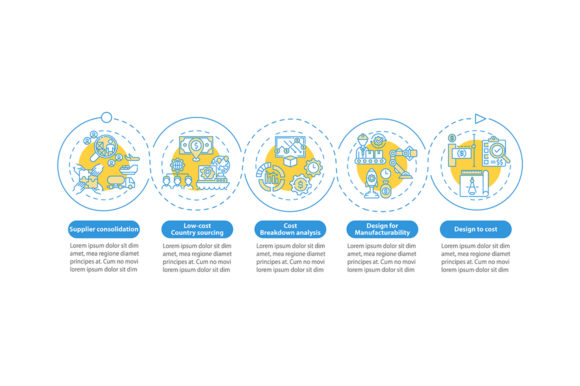
One of the most practical features found in high-quality ergonomic templates is structured data visualization. Complex processes, such as setting up a new workstation or performing a self-assessment, are best understood sequentially. Templates featuring a 5-step process timeline chart allow you to break down overwhelming information into digestible chunks. Instead of presenting a massive checklist, you can guide users through a logical flow: adjusting the chair, positioning the keyboard, aligning the monitor, managing lighting, and incorporating movement breaks.
This linear workflow layout with icons serves a dual purpose. First, it creates a narrative structure that helps learners retain information. Second, it saves designers hours of alignment and formatting work. For freelancers and small business owners who lack dedicated design teams, this pre-built structure is invaluable. You can quickly swap out generic placeholder text with your specific company policies while maintaining a polished, cohesive aesthetic. The result is training material that looks custom-made without the custom price tag or turnaround time.
Real-World Applications Across Different Sectors
The utility of an Office Ergonomics Vector Infographic extends far beyond corporate HR departments. Understanding where and when to deploy these assets reveals their true value across various professional and educational landscapes.
- Corporate Wellness Programs: Large organizations use these infographics in onboarding packets and annual refresher courses. The ability to edit vector files means branding colors can be matched exactly, reinforcing corporate identity while promoting employee well-being.
- Educational Institutions: Universities and vocational schools teaching occupational therapy, nursing, or office administration use these visuals as teaching aids. Students learn to identify risk factors by analyzing infographic elements like improper screen angles or missing lumbar support.
- Digital Content Creators: Bloggers and influencers in the productivity niche use these graphics to illustrate articles about home office setups. High-resolution PNG and JPG exports make it easy to embed optimized images that load quickly and look sharp on mobile devices.
- Healthcare Providers: Physical therapists and chiropractors print these infographics as patient handouts. Having a visual takeaway helps patients remember clinical advice once they leave the office, improving treatment outcomes.
- Remote Work Consultants: As hybrid work models persist, consultants use these templates to audit home offices via video calls, sharing annotated screenshots to demonstrate necessary adjustments in real-time.
Technical Versatility: EPS, SVG, PNG, and JPG Formats
When selecting a resource, the file formats included in the ZIP package determine its long-term usefulness. A comprehensive Office Ergonomics Vector Infographic template should offer maximum flexibility through multiple export options. EPS and SVG files are the industry standards for scalability. These formats allow you to open the artwork in Adobe Illustrator, CorelDRAW, or free alternatives like Inkscape to modify individual elements. Need to change the style of the chair? Want to add a standing desk variant? Vector editing makes this possible without degrading quality.
Conversely, PNG and JPG files cater to users who need immediate, plug-and-play solutions. Marketers preparing a social media campaign or a newsletter might not have the time or software to edit source files. Ready-to-use raster images allow for instant deployment across digital platforms. This multi-format approach ensures that the asset remains relevant regardless of the user’s technical skill level or current project requirements. It bridges the gap between professional designers needing raw assets and busy professionals needing finished visuals.
Strategic Considerations Before Implementation
Before downloading or purchasing an ergonomic infographic template, consider how it aligns with your specific communication goals. Not all templates are created equal, and the right choice depends on your audience's needs. Evaluate whether the included design elements match the equipment your audience actually uses. A template featuring outdated CRT monitors or generic desks may feel disconnected from a modern workforce using laptops, dual-monitor arms, and sit-stand converters. Relevance drives engagement; if the visual doesn't reflect reality, users will tune out.
Also, assess the customization depth required for your project. If you intend to translate the content into multiple languages, ensure the text layers are organized and editable. Some templates flatten text into shapes, making translation difficult. Additionally, check the licensing terms carefully. Commercial use rights are essential for businesses selling ergonomic products or consultants offering paid workshops. Personal use licenses may suffice for internal training but could pose legal risks if used in client-facing deliverables.
Enhancing Workflow Efficiency and Learning Outcomes
Ultimately, the goal of using an Office Ergonomics Vector Infographic is to improve outcomes efficiently. For educators and trainers, this means faster lesson preparation and higher student comprehension rates. Visual learners, who make up a significant portion of any audience, grasp spatial concepts faster through diagrams than through verbal instruction alone. By leveraging pre-designed workflow layouts, instructors can spend more time interacting with students and less time fiddling with PowerPoint shapes.
For businesses, the efficiency gain translates to cost savings. Workplace musculoskeletal disorders are expensive. Clear, consistent visual communication helps prevent these injuries by ensuring employees know exactly how to configure their environment. When safety information is presented consistently across all channels—from the intranet to the breakroom poster—it reinforces positive habits. The template acts as a single source of truth, eliminating conflicting advice and ensuring everyone receives the same high-standard guidance.
Incorporating these visual tools into your strategy is not just about aesthetics; it is about functional communication. Whether you are designing a comprehensive safety manual, creating a quick-reference card for new hires, or publishing a blog post about remote work health, the right vector infographic template provides the foundation for success. It combines technical precision with creative flexibility, empowering you to deliver information that protects people and enhances productivity. By choosing resources that offer diverse formats and realistic design elements, you ensure your message resonates clearly in an increasingly visual world.